
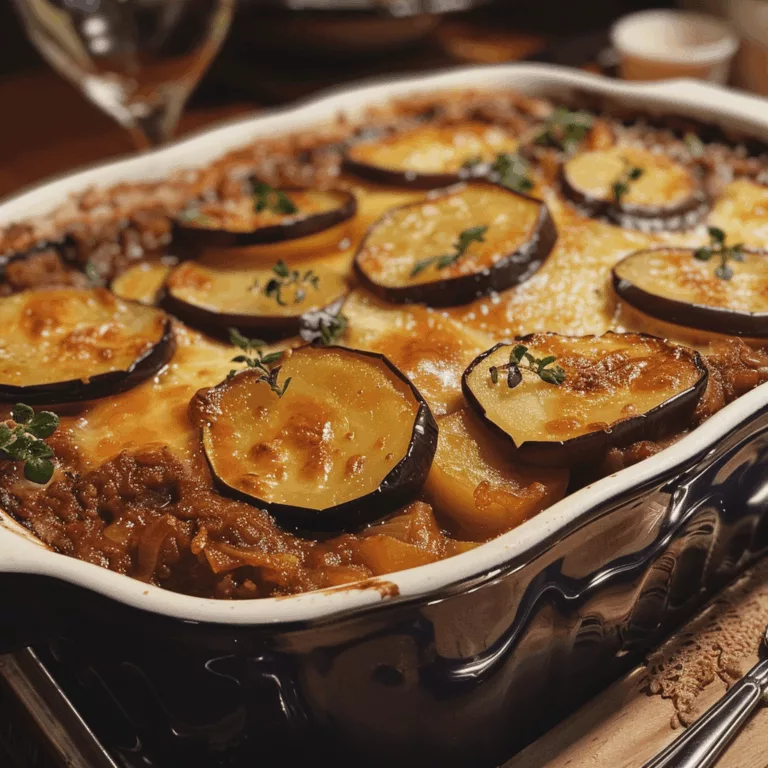
Greek moussaka
Discover the magic of this traditional Greek moussaka—a layered, baked casserole that captures the heart of Greek cuisine. This article takes you on a culinary journey, exploring every detail of this iconic dish: from the sumptuous layers of eggplant and potatoes to the rich, spiced meat sauce and the luxurious, custard-like béchamel sauce. Whether you’re a seasoned chef or an enthusiastic home cook, you’re about to learn how to create an authentic moussaka that brings the warm flavors of Greece right into your kitchen.
What is Moussaka?
Moussaka is a beloved Mediterranean dish known for its distinctive layers and hearty ingredients. Unlike traditional Italian lasagna, moussaka replaces pasta with beautifully prepared layers of eggplant and potatoes. The dish is crowned with a velvety béchamel sauce and filled with a robust meat sauce that is enriched with traditional spices such as cinnamon and nutmeg. For more details on the origins and variations of this dish, check out Moussaka (Wikipedia) to deepen your understanding of this culinary treasure.
Origins and History
The history of moussaka is as rich as its flavors. Its roots extend back through influences from the Ottoman Empire and the Middle East, with eggplants introduced to Greece long ago. Over time, the modern version we enjoy today evolved—especially with the contributions of Greek chefs who refined the recipe in the early 20th century. To dive deeper into this fascinating evolution, visit History of Moussaka for an engaging look at how this dish became a cornerstone of Greek cuisine. This historical context adds depth to your cooking, connecting each step to a legacy of tradition and innovation.
Why You’ll Love This Recipe
This authentic moussaka recipe is designed to delight every palate. Here’s why you’ll fall in love with it:
- Hearty & Filling: With layers of eggplant, potatoes, and a robust meat sauce, this dish is a complete, satisfying meal.
- Bursting with Flavor: Traditional spices like cinnamon and nutmeg lend warmth and complexity to the meat sauce.
- Creamy Perfection: The silky béchamel sauce crowns the dish with a rich, custard-like finish that elevates every bite.
- Versatile & Adaptable: Whether you’re a fan of classic lamb or prefer a mix of meats (or even a vegetarian twist), this recipe can be tailored to your taste.
For additional inspiration, consider exploring our internal recipes on Lamb Moussaka Recipe for a twist that highlights the robust flavor of lamb or try our Vegetarian Moussaka Recipe for a meat-free version that doesn’t compromise on taste.
Ingredients Overview
Creating an impeccable traditional Greek moussaka with potatoes starts with using the right ingredients. Each element plays a vital role in crafting a balanced, flavorful dish:
- Eggplants (Aubergines):
- Choose large, firm eggplants to maintain structure during cooking.
- Optionally, sprinkle with salt and let them rest for 30 minutes to draw out moisture and reduce bitterness.
- Potatoes:
- Use starchy varieties like Yukon Gold or Russet for a sturdy base.
- Slice into uniform ¼-inch rounds to ensure even cooking.
- Ground Meat:
- Traditionally, lamb is used, though beef or a mix of both can also be excellent.
- Use lean meat to avoid excess grease in the final dish.
- Tomatoes & Aromatics:
- Fresh or canned tomatoes (or tomato paste) create a rich base for the meat sauce.
- Chopped onions and minced garlic are essential for building depth.
- Traditional spices include a pinch of cinnamon, a hint of allspice or clove, and sometimes a bay leaf.
- Béchamel Sauce:
- Made with butter, flour, and milk, then enriched with egg yolks and a touch of nutmeg.
- Incorporate a high-quality, hard cheese like kefalotyri, graviera, or a Parmesan substitute for extra richness.
- Olive Oil & Seasonings:
- Use extra virgin olive oil for frying or roasting the vegetables.
- Season with salt and pepper throughout to enhance all flavors.
Each ingredient contributes to a harmonious blend that makes this dish a true representation of Greek cuisine.
Preparing the Vegetables
Getting your vegetables just right is crucial for an outstanding moussaka. Follow these steps for perfectly prepared eggplant and potato slices:
- Eggplant Preparation:
- Slice Evenly: Cut eggplants into uniform ½-inch slices.
- Salt & Drain: Optionally, sprinkle with salt, let sit for 30 minutes, then pat dry.
- Cooking Methods:
- Frying: Fry the slices in olive oil until golden brown. Work in small batches to ensure even cooking, and drain on paper towels.
- Baking: For a lighter version, brush with olive oil, arrange on a baking sheet, and roast at 200°C (400°F) until tender.
- Potato Preparation:
- Slice Thinly: Peel (if desired) and slice the potatoes about ¼ inch thick.
- Optional Par-Boiling: Par-boil the slices briefly or soak them to remove extra starch, ensuring they cook evenly.
- Achieving the Right Texture: Aim for a tender interior with a slightly crispy exterior.
These steps will ensure your vegetables are ready to hold their place in the layered masterpiece that is moussaka.
Preparing the Meat Sauce
The rich meat sauce is the heart of this dish. Follow these instructions for a sauce that’s bursting with flavor:
- Sauté Aromatics:
- Heat olive oil in a large pot.
- Add finely chopped onions and cook until translucent.
- Mix in minced garlic until fragrant.
- Brown the Meat:
- Add your ground lamb (or beef) and cook until browned, breaking up the meat as it cooks.
- Drain excess fat if necessary to maintain a lean sauce.
- Build the Sauce:
- Stir in tomato puree or crushed tomatoes.
- Season with traditional spices: a pinch of cinnamon, a hint of allspice or clove, a bay leaf, and a splash of red wine (optional) for extra depth.
- Simmer the mixture for 20–30 minutes until it thickens to a rich consistency.
- Final Adjustments:
- Remove whole spices such as the bay leaf and adjust seasoning as needed.
This robust meat sauce layers beautifully with the vegetables and ties the entire dish together. For an even simpler preparation, check out our Simple Moussaka Recipe which breaks down the steps for beginners.
Preparing the Béchamel Sauce
A smooth, creamy béchamel sauce is essential for the finishing touch on your moussaka. Here’s how to prepare it:
- Start with a Roux:
- Melt butter in a saucepan over medium heat.
- Whisk in all-purpose flour and cook for 1–2 minutes until lightly golden.
- Incorporate Milk Gradually:
- Slowly add warm milk while whisking continuously to form a smooth sauce.
- Continue stirring until the sauce thickens enough to coat the back of a spoon.
- Season and Enrich:
- Remove the sauce from heat and stir in salt, pepper, and freshly grated nutmeg.
- Once slightly cooled, whisk in egg yolks one at a time to avoid scrambling.
- Mix in grated hard cheese (such as kefalotyri, graviera, or Parmesan) until fully incorporated.
- Consistency Check:
- Ensure the sauce is thick and smooth; adjust with a splash of milk if necessary.
The béchamel sauce not only provides a luxurious creaminess but also forms a beautiful, golden crust as it bakes.
Layering and Assembling the Moussaka
Now it’s time to assemble your moussaka into a stunning layered dish:
- Prepare Your Baking Dish:
- Use a deep, oven-safe dish (around 9×13 inches) and lightly grease it with olive oil or butter.
- Create the Base:
- Arrange a layer of pre-cooked potato slices on the bottom of the dish, ensuring they overlap slightly for a stable foundation.
- Add the Eggplant:
- Lay a layer of eggplant slices over the potatoes.
- Optionally, sprinkle a little salt, pepper, and a bit of grated cheese over this layer.
- Layer the Meat Sauce:
- Evenly spread the prepared meat sauce over the eggplant layer.
- Repeat and Top:
- Add another layer of eggplant slices on top of the meat sauce.
- Finally, pour the prepared béchamel sauce over the top, smoothing it out with a spatula for an even, thick layer.
- A light dusting of extra cheese or breadcrumbs can add a delightful crispy finish once baked.
This careful layering ensures each slice of your moussaka is a balanced medley of flavors and textures.
Baking and Resting
The final step is to bake your creation to perfection and allow it to set:
- Baking Process:
- Preheat your oven to 180°C (350°F).
- Place the assembled dish in the oven and bake for 45–60 minutes until the béchamel sauce is beautifully golden and set.
- Resting:
- Remove the dish from the oven and let it rest for 20–30 minutes.
- This resting period is crucial as it allows the layers to firm up, making it easier to cut and serve.
Baking and resting are key to ensuring every bite of your traditional Greek moussaka is as delightful as intended.
Tips for the Best Moussaka
Elevate your cooking experience with these expert tips:
- Quality Ingredients:
- Use the freshest eggplants and potatoes available.
- Opt for high-quality olive oil and fresh herbs to enhance flavor.
- Even Slicing:
- Ensure uniform slices for both eggplant and potatoes—a mandoline can help achieve this.
- Cooking Techniques:
- Fry in small batches or roast for a healthier alternative, ensuring the vegetables remain crisp yet tender.
- Perfect Meat Sauce:
- Simmer the meat sauce until it’s thick enough to hold its shape without making the dish soggy.
- Béchamel Mastery:
- Stir continuously to avoid lumps and achieve a smooth, custard-like consistency.
- Don’t Rush the Rest:
- Allow ample resting time so that the layers settle and the flavors meld beautifully.
These tips are designed to ensure your moussaka is both authentic and utterly delicious.
Variations and Adaptations
While this is a classic traditional Greek moussaka with potatoes, there are several ways to adapt the recipe to your taste:
- Vegetable Variations:
- For an eggplant-only version, omit the potatoes.
- Consider adding a layer of thinly sliced zucchini for extra texture.
- Cheese Options:
- Although kefalotyri is traditional, you can substitute Pecorino Romano or Parmesan as needed.
- Meat Alternatives:
- Use a mix of ground lamb and beef, or opt for all-beef if preferred.
- For a lighter dish, substitute with ground turkey or chicken.
- Vegetarian/Vegan Options:
- Replace the meat sauce with a hearty blend of mushrooms, lentils, or a tomato-based vegetable stew.
- Prepare a vegan béchamel using plant-based milk and vegan butter, thickened with cornstarch.
- Creative Toppings:
- Experiment with a mashed potato topping instead of béchamel for a modern twist.
- Regional Flavors:
- Explore minor variations in spice blends to suit different regional tastes within Greek cuisine.
These adaptations allow you to tailor the dish while keeping its essential, traditional character intact.
Serving Suggestions
Enhance your dining experience with these serving ideas:
- Fresh Greek Salad:
- Enjoy a crisp salad featuring tomatoes, cucumber, onions, feta, and olives.
- This refreshing side, also known as Horiatiki, balances the richness of the moussaka.
- Discover more about the classic Greek salad here.
- Crusty Bread or Pita:
- Serve with a side of crusty bread or warm pita to soak up the delicious sauces.
- Condiments:
- A dollop of Greek yogurt or a side of tzatziki offers a tangy, cooling contrast to the warm spices.
These serving suggestions make the perfect accompaniment to your hearty, layered dish.
Make-Ahead and Storage
Planning ahead is key to enjoying moussaka at its best:
- Advance Preparation:
- Prepare all components—the meat sauce, pre-cooked eggplant and potato slices, and béchamel sauce—a day in advance.
- Assemble the dish and refrigerate overnight. For optimal texture, consider adding the béchamel just before baking.
- Storing Leftovers:
- Let the dish cool completely, then store portions in airtight containers in the refrigerator for 3–4 days.
- Freezing:
- Moussaka freezes well. Wrap individual portions tightly and store in freezer-safe containers for 2–3 months.
- Thaw overnight in the refrigerator and reheat in an oven preheated to 180°C (350°F) for best results.
- Reheating Tips:
- Reheat in the oven to maintain the texture of the béchamel sauce; if using a microwave, use medium power to avoid separation.
These strategies ensure you can enjoy your traditional moussaka even when prepared in advance.
Conclusion
Crafting a traditional Greek moussaka with potatoes is a rewarding culinary adventure that brings together layers of flavor, texture, and heritage. With every sumptuous bite—from the rich meat sauce to the creamy béchamel and perfectly prepared vegetables—you’re savoring a true taste of Greek cuisine. Enjoy the process, experiment with variations, and share this timeless dish with family and friends.
Frequently Asked Questions (FAQs)
- Does traditional Greek moussaka include potatoes?
Yes. Many authentic recipes include a base layer of potatoes that provides structure and adds a comforting, starchy balance to the dish. - Can I make moussaka ahead of time?
Absolutely. You can prepare components in advance, assemble the dish, and refrigerate it overnight. This not only saves time but also allows the flavors to meld. - How do I freeze and reheat moussaka?
Moussaka freezes very well. Once cooled, portion it out, wrap tightly, and store for up to 2–3 months. Thaw overnight and reheat in the oven for best results. - What’s the best way to serve moussaka?
Serve your moussaka warm, allowing it to rest after baking so the layers set. Pair it with a refreshing Greek salad or crusty bread to complement its richness. - How is moussaka different from lasagna?
Moussaka replaces pasta with layers of eggplant and potatoes, and its flavor profile is defined by Mediterranean spices and a luxurious béchamel sauce, setting it apart from traditional Italian lasagna.
Bon Appétit!
Internal Linking Opportunities
Based on the Timothy Recipes sitemap, here are some suggested internal linking opportunities to further enrich your article and boost SEO:
- Lamb Moussaka Recipe:
Use this link as rich anchor text when discussing the traditional meat sauce—ideal for readers interested in a robust lamb moussaka variant. - Vegetarian Moussaka Recipe:
Incorporate this link in sections covering recipe adaptations or vegetarian options, offering an alternative for those seeking a meatless version. - Simple Moussaka Recipe:
Link this anchor text in your tips section to assist beginners with an easy-to-follow approach to preparing a classic moussaka.
These internal links not only improve the user experience by offering additional related content but also help establish your site’s topical authority in Greek cuisine.